closing the snap gap
New research on challenges young adults face and recommendations to fix them
Ali is a 19-year-old full-time community college student living with three roommates. Like many young adults, Ali struggles with food insecurity and may be eligible for support through the Supplemental Nutrition Assistance Program (SNAP).
Unfortunately, young adults like Ali are significantly underrepresented in SNAP participants. Nationally, only 1 in 5 college students is enrolled in SNAP despite much higher eligibility rates.
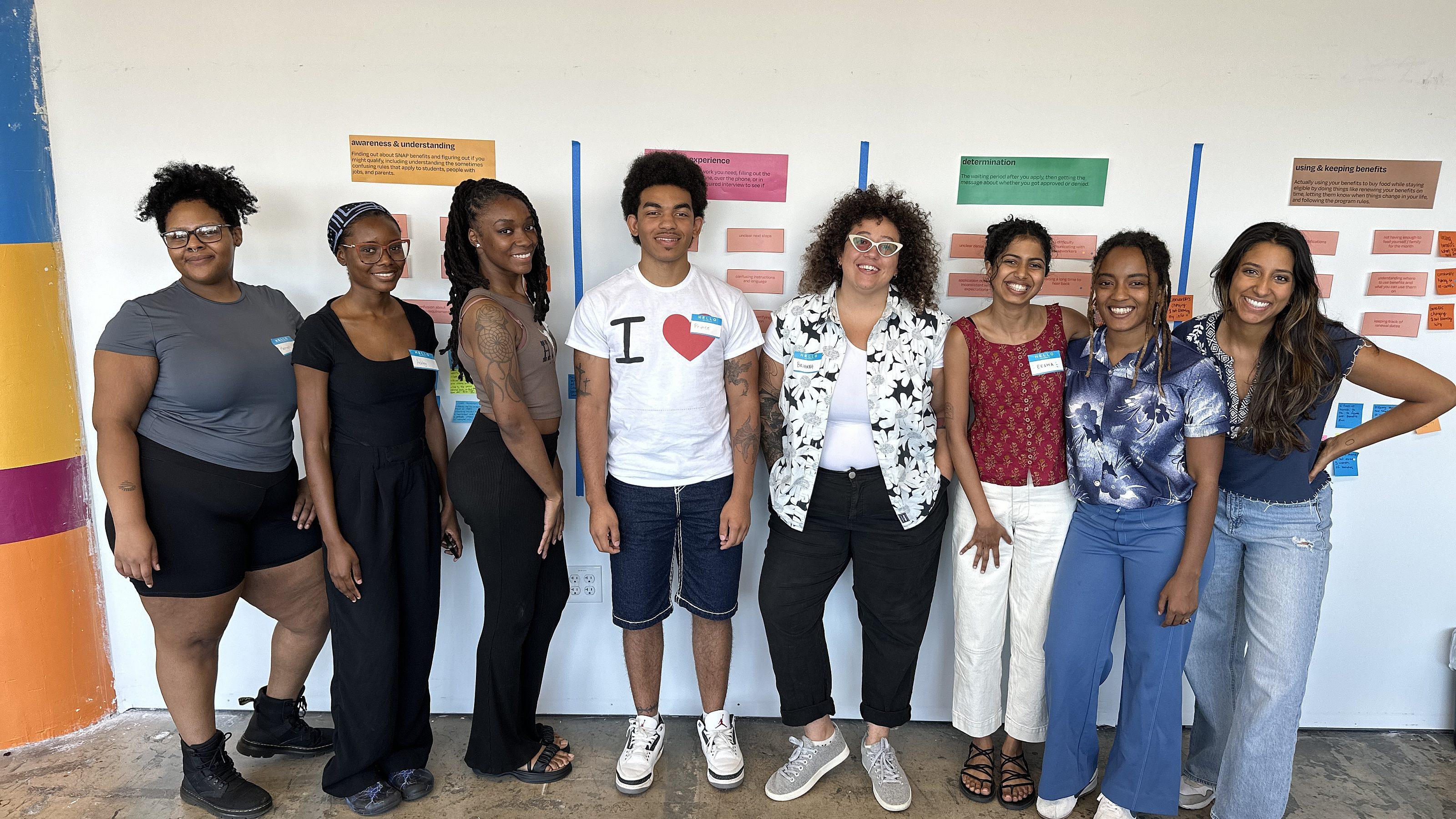
In 2025, Civilla conducted human-centered research with young adults, community organizations, frontline caseworkers, and national subject matter experts to generate insights into low SNAP participation rates among young adults. With support from the Annie E. Casey Foundation, Civilla has created a research brief that includes insights about the challenges young adults face and recommendations for how states can improve SNAP access.
The experience of Ali, whose journey is a compilation of real experiences our team heard during our research, highlights some of the common challenges young adults face when trying to access food benefits.
confusion about eligibility
Young adults like Ali have often heard of SNAP but either don’t think they are eligible or view the program negatively based on the experiences of families and friends.
Growing up, Ali’s family received SNAP benefits, which led Ali to assume that food assistance was only for families, not for young people living on their own. While juggling classes and part-time gig work for Uber Eats, he often struggles to afford food throughout the month.
"I think there's a lot of misinformation about who food stamps are for and how you can get them. Most people don't even know you can get them for [just] one person."
- Young adult grad student
When he first started school, Ali was advised by his school to apply for Medicaid and was offered a SNAP application at the same time. He decided not to apply, thinking he wouldn't be eligible. More recently, Ali saw a SNAP poster at a campus food pantry and wondered whether he might be eligible. His curiosity was mixed with hesitation. He worried that his friends might see him differently if they found out he needed help from the government. With little left of his last paycheck to see him through the end of the month, he decided to apply online.
a mismatch between life and requirements
Many young adults like Ali are living in non-traditional circumstances that don’t fit into rigid SNAP requirements. Since Ali has roommates and is a gig worker, some of the questions on the SNAP application are confusing: Who counts as my household? How do I report income when my hours are inconsistent? When applying, Ali decided to call his mom for help. Together, they answered the questions as best they could and submitted his application.
Ali felt encouraged by his state’s online application tracker, but when he went to check his application status a few weeks later, he had forgotten his password. Without time to call the help desk, he was unable to access his account and wondered when he might hear about his food benefits.
Important updates came by mail, which Ali rarely checked due to his busy schedule. He missed a notice about his upcoming interview and another about the income documents he needed to submit. When the interview call came, Ali was in class. The voicemail said he had missed his interview and would need to reschedule.
Ali rescheduled his interview, but the call came an hour late and during a work pickup order. He completed the interview but was frustrated by having to answer many of the same questions as in the application. The caseworker requested additional income paperwork, but Ali wasn’t sure how to get it from his employer and felt embarrassed to ask. He pulled together what he could and submitted the incomplete documents.
procedural steps feel personal
Young adults ages 18 to 24 are highly attuned to how they are perceived and deeply desire to be treated with respect and autonomy. They’re sensitive to social cues and exclusion, making interactions with authority figures, such as government staff or caseworkers, particularly delicate. For many, administrative feedback can feel personal rather than procedural.
After applying, Ali wasn’t sure when he would hear back about his benefits and continued to wait. He visited the campus food pantry again, wishing there were additional resources to help him. He needed food benefits when he applied, not weeks later.
A few weeks later, he received a determination letter in the mail. His missing paperwork had led to his application being denied. Already stretched thin with school and work, Ali felt discouraged and assumed the rejection was final—it had come from the government, after all. He decided not to reapply or appeal, leaving him without the food support he needed.
"I kind of just felt a little drained and demoralized from getting the rejection and then had other stuff to do, so I just kind of put it off, and then time just kind of kept moving."
- Young working adult
pathways to support
The barriers young adults face are real but not insurmountable. Civilla’s research uncovered opportunities for states to meet young adults where they are to support them in accessing SNAP benefits. We recommend that states pursue four strategies to improve SNAP participation:
Proactive, cross-program outreach. Use data from financial aid systems, Medicaid, and workforce programs to identify likely-eligible young adults and reach them through trusted channels.
Community-based navigation infrastructure. Recruit peer navigators with lived SNAP experience and embed them in colleges, workforce programs, libraries, and community centers to support young adults through the process.
Modern digital tools. Move from one-way notifications to two-way text interactions so the SNAP experience is closer to how young adults navigate other systems in their lives.
Redesigned communications. Rewrite denial and verification letters to clearly distinguish full ineligibility from correctable issues. Use plain language, checklists, and visual cues to show what's missing and what to do next.
By implementing these recommendations, states can close the participation gap and ensure that eligible young adults access the nutrition support they need to thrive during this critical period of their lives.